Manufacturer: Forgeline

Frame anchor 10 × 140 mm

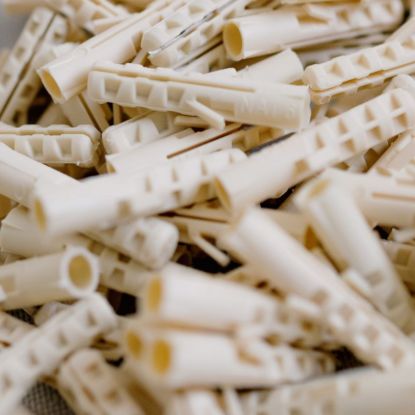
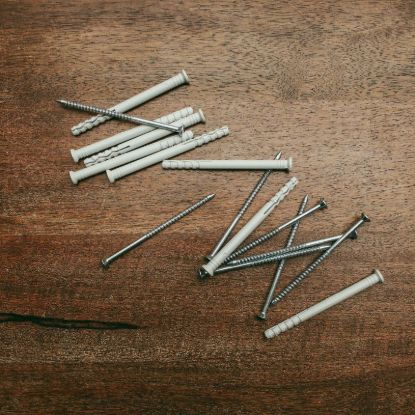
Forgeline 10 × 140 mm frame anchor: a long nylon sleeve with a pre-fitted countersunk steel screw. It fixes window frames, door linings and battens straight through into masonry without moving them, in one drilling. Works in concrete, brick and block, and comes in packs of 50.
SKU: FL-FA10140
In stock
Availability: In stock
Price
$0.56

PRICE BREAKS - The more you buy, the more you save

Quantity Unit price
10–49 $0.53
50–199 $0.50
200+ $0.48

Sold in anchors. Quantities round up to full packs.

Description

Overview

A frame anchor lets you fix a timber or uPVC frame to the wall in one go. You set the frame in position, drill through it and into the masonry behind, push the anchor through and drive the screw. Because the sleeve passes through the frame, the frame does not need packing out or temporary support while you fix it, and it will not be pulled out of line.

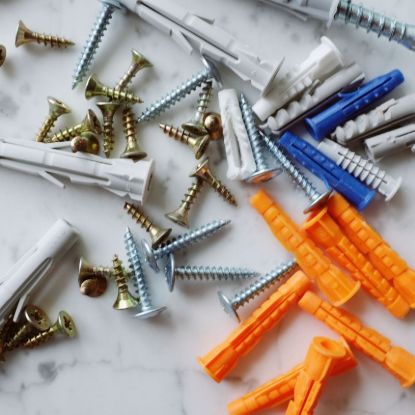
Each Forgeline anchor comes as one piece: a polyamide sleeve with a zinc plated countersunk screw already started in it, so there are no loose parts to lose on a ladder. Fitters can carry a box on the belt and fix a whole frame without going back to the van.

Sold in packs of 50 anchors.

Where to use it

Frame anchors are the standard fixing for:

  • Window and door frames, timber and uPVC
  • Door linings and casings
  • Timber battens and ground bearers on masonry walls
  • Handrail brackets and wall plates
  • Fixing through insulation boards to masonry

Design and construction

The sleeve has a long plain shank that passes through the frame and an expansion zone at the tip with anti-rotation ribs. As the screw is driven, the expansion zone opens and grips the hole. In solid materials it expands; in hollow brick and block it spreads across the webs for a secure hold.

The countersunk screw head sits flush with the frame face so it can be capped or filled. The 8 mm anchors use a T30 screw and the 10 mm anchors a T40, both of which are less likely to cam out than a cross-head screw at the end of the drive.

Choosing the right size

The anchor length is the fixture thickness plus the depth it must go into the wall. The 8 mm anchors need 50 mm in the masonry and the 10 mm anchors 60 mm, so subtract that from the length to get the thickest frame you can fix. The maximum fixture thickness for each size is in the specifications.

Choose 8 mm for standard window frames and linings. Choose 10 mm for heavier door frames, softer masonry or where you want a larger safety margin.

Installation

Drill through the frame and into the wall with a masonry bit the same diameter as the anchor, using hammer action only in solid materials. Drill at least 10 mm deeper than the embedment depth and clear out the dust. Tap the anchor in until the collar is flush with the frame, then drive the screw until the head sits flush. Do not overtighten; the frame should not bow.

Keep to the edge and spacing distances in the specifications, especially in brick, to avoid cracking the masonry near reveals.

Packaging and ordering

Anchors come boxed in 50s with a size and barcode label. Window fitters and joiners often order 8 mm and 10 mm sizes together with masonry bits; trade customers can add both in one quick order and see tier pricing on larger quantities.

Demo product: invented for the Cartenvo B2B demo store.
Technical specifications

Specifications

Products specifications

Attribute name Attribute value
Size 10 × 140
Material Nylon with steel screw
Drive Torx T40
General
Brand Forgeline
Product type Frame anchor with pre-fitted screw
Application Window frames, door linings and battens on masonry
Country of manufacture Poland
Warranty 12 months against manufacturing defects
Performance
Recommended tensile load, concrete C20/25 (kN) 0.9
Recommended tensile load, solid brick (kN) 0.6
Installation temperature (°C) -5 to +40
Operating temperature (°C) -40 to +80
Dimensions and weight
Drill diameter (mm) 10
Screw diameter (mm) 7
Minimum embedment depth (mm) 60
Minimum drill hole depth (mm) 70
Maximum fixture thickness (mm) 80
Minimum edge distance (mm) 70
Packed weight (kg) 2.05
Materials and construction
Sleeve material Polyamide 6, grey
Screw finish Zinc plated
Screw head Countersunk
Suitable base materials Concrete, solid and hollow brick, solid and hollow block
Compliance and safety
Standards Manufacturer load data; not for safety-critical fixings
CE / UKCA marked Not required for this product
RoHS compliant Yes
Packaging and ordering
Pack quantity 50 anchors with screws
Barcode type EAN-13 on pack label
Storage temperature (°C) 5 to 30, dry, out of direct sunlight

FAQs

How thick a frame can I fix with each anchor?

Take the 50 mm embedment off the length for 8 mm anchors, or 60 mm for 10 mm anchors. For example, an 8 × 100 mm anchor fixes up to 50 mm of frame. The maximum fixture thickness for each size is listed in the specifications.

Do I drill the frame and the wall separately?

No. Set the frame in place, then drill through the frame and into the wall in one go with a masonry bit of the anchor diameter. This keeps the holes in line and the frame where you put it.

Can I use frame anchors in hollow block or perforated brick?

Yes. Turn off hammer action when drilling hollow materials so the webs do not break out, and drill with rotation only. The sleeve spreads across the webs as the screw is driven.

Which bit do I need for the screw?

The 8 mm anchors take a Torx T30 bit and the 10 mm anchors a Torx T40 bit. A good-quality bit in a drill driver on a low clutch setting gives the best result.

Can frame anchors be used outdoors?

The nylon sleeve is fine outdoors once installed, but the screw is zinc plated. On exposed external work, cap or fill the screw head, or use a stainless fixing where the head stays wet.

Can I use them to hold heavy loads such as a canopy?

No. Frame anchors are for frames, linings and battens. For heavy or safety-critical loads use through bolts or a fixing with an engineer's approved load rating.