Overview
This is the general-purpose wood screw for first and second fix work. The twin-start thread drives twice as far per turn as a single thread, so screws go in faster with less effort from the driver. A sharp point bites straight away, and on most softwoods you can drive without a pilot hole. The thread is sharp along its full length, so the screw keeps cutting cleanly even in dense board.
Each screw is case hardened to resist snapping and cam-out, then zinc plated with a yellow trivalent passivate that protects against damp in normal indoor conditions.
Sold in packs of 200 screws.
Where to use it
Use these screws for most timber and board jobs indoors:
- Joinery, framing and studwork
- Kitchen and bedroom fitting
- Shelving, cupboards and workbenches
- Fixing hinges, brackets and hooks
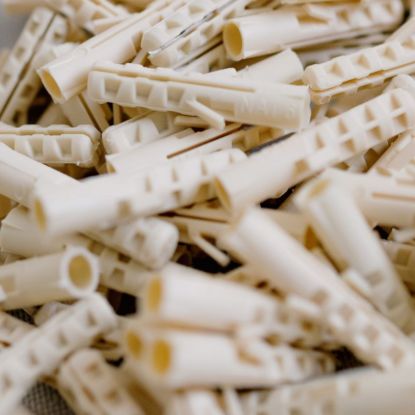
- With wall plugs into brick and block
Design and construction
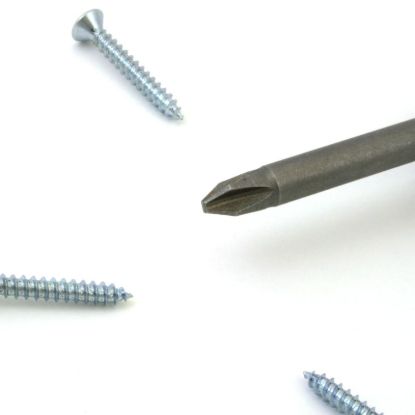
The countersunk head has nibs underneath that cut their own seat, so the head sits flush without a separate countersink in softwood and chipboard. The pozidriv recess holds the bit firmly and reduces cam-out, which protects both the screw and the bit.
Shorter screws are threaded right up to the head. Longer lengths have a plain shank under the head, so the top piece of timber is pulled tight against the one below rather than jacked apart.
Choosing the right size
As a guide, the screw should go into the piece you are fixing into by at least twice the thickness of the piece you are fixing. Use 3.5 mm screws for light work such as hinges and thin panels, 4.0 mm for most cabinet and joinery jobs, and 5.0 mm where strength matters, such as framing and heavy shelving.
When fixing into masonry, match the screw to the plug: the specifications list the plug size that suits each diameter.
For MDF and chipboard, keep screws at least 25 mm from corners and 10 mm from edges, and drill a pilot hole near edges to stop the board swelling or breaking out. Never drive into the end grain of chipboard; use a connector or dowel there instead.
Driving and care
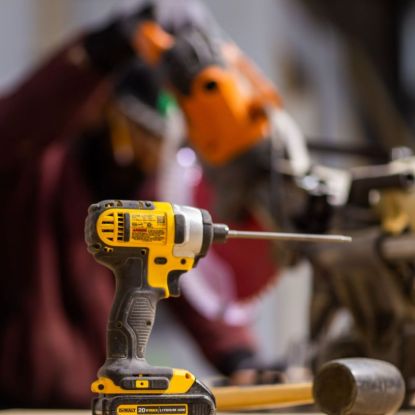
Use a PZ2 bit in a drill driver or impact driver with the clutch set low to avoid overdriving. In hardwoods and near the end of a board, drill a pilot hole first to stop splitting; the recommended sizes are in the technical tab. A clearance hole in the top piece helps it pull down tight.
The yellow finish is for indoor use. For decking, fencing and treated timber outdoors use screws with an exterior coating or stainless steel.
Packaging and ordering
Screws come in labelled boxes of 200, with the size and barcode on the end so they are easy to find on a van shelf. Trade customers can build a mixed order of sizes with quick order, and larger quantities pick up tier prices automatically.
Demo product: invented for the Cartenvo B2B demo store.