Overview
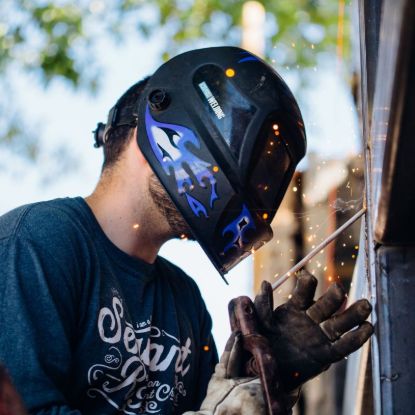
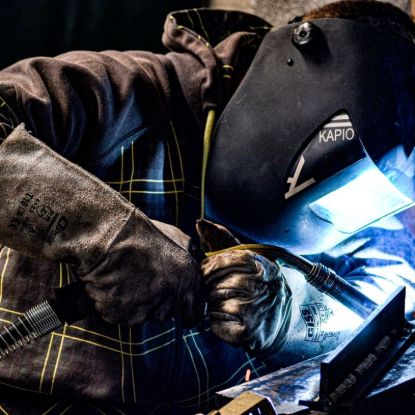
An auto-darkening helmet lets you see the joint clearly before you strike, then switches to a dark shade in a fraction of a millisecond when the arc starts. There is no need to nod the helmet down, which means better starts, fewer misplaced tacks and less neck strain over a working day.
This Spatterline helmet suits MIG, TIG, stick and plasma work. Shade, sensitivity and delay are set with dials on the filter, and a grind mode holds the filter in its light state so the helmet works as a face shield.
Key features
- Shade 4 light, 9–13 dark, grind mode
- Four sensors, sensitivity and delay control
- Replaceable battery with solar assist
- Certified to AS/NZS 1338.1
Choosing the right version
All three versions share the same filter performance and controls. The difference is the view and how the helmet works with other equipment.
- Standard view: light, compact and good value for general fabrication
- True colour, side view: clearer colours and side windows for wider awareness
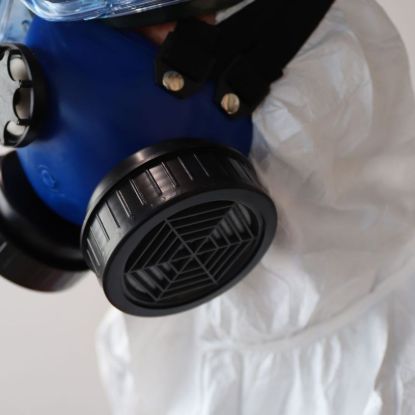
- Respirator ready: works with a powered air-purifying respirator for fume-heavy work
- All versions: shade 9 to 13, grind mode and four sensors
Setting the shade
Choose the shade by process and current. As a guide, use shade 9 to 10 for low-current TIG and MIG on thin sheet, shade 10 to 11 for most MIG and stick welding, and shade 12 to 13 for high-current MIG, gouging and heavy stick work. Start darker and go lighter until the pool is clear without glare.
Turn sensitivity up for low-current TIG or when part of the arc is hidden, and down if other welders nearby trigger your filter. A longer delay keeps the filter dark while the hot metal cools after a high-current weld.
Fit and comfort
The ratchet headgear adjusts for size and for the height and tilt of the shell, and the sweatband is replaceable. Spend a minute setting the headgear so the helmet balances on your head rather than pressing on the forehead; it makes a real difference over a full shift. The shell is light and shaped to deflect sparks away from the neck and to sit close to the face without touching it.
Care and maintenance
Replace the outer cover lens as soon as spatter makes the view hazy, and change the inner lens when it scratches. Clean the filter with a soft cloth and never with solvents. The battery is replaceable and the solar cells extend its life; if the filter flickers or will not darken, change the battery before anything else.
Store the helmet away from direct sunlight and heat, and keep it in a bag when not in use to protect the filter and lenses.
Compliance and ordering
The filter meets EN 379 and the helmet meets EN 175 as well as AS/NZS 1338.1, and it carries CE and UKCA marking as personal protective equipment. Cover lenses are sold in packs for regular replacement. Trade customers can order helmets and consumable lenses on account for a whole team.
Demo product: invented for the Cartenvo B2B demo store.