Overview
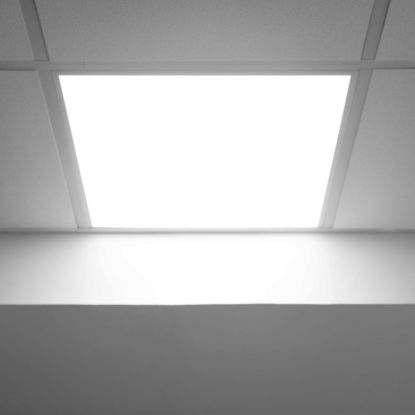
This flat LED panel replaces the four-tube fluorescent modules found in many suspended ceilings. LEDs along the edges shine into a light guide plate, which spreads the light evenly across the whole face, so there are no bright spots or dark corners. A microprismatic diffuser controls glare, which makes the panel suitable for screen work.
The panel is only 10 mm deep and weighs under 3 kg, so it is easy to handle on a ladder and puts little load on the ceiling grid. The external driver connects with a plug-in lead, so panels can be swapped without rewiring.
Where to use it
The panels fit standard 600 mm grid ceilings with exposed T-bar.
- Offices, meeting rooms and open-plan areas
- Schools, colleges and training rooms
- Surgeries, clinics and care homes
- Shops and showrooms
- Corridors and reception areas
Design and construction
The frame is extruded aluminium with a white powder-coated finish that matches most ceiling grids. Behind the diffuser sits the light guide plate and a reflector sheet, which sends light that would be lost upwards back into the room. The LEDs sit in the frame, which acts as a heat sink and keeps them at a steady temperature.
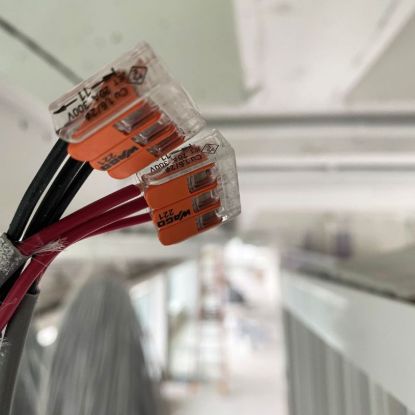
The driver is a separate constant-current unit with a fixed output and very low ripple, so there is no visible flicker or stroboscopic effect on moving machinery or screens. It has a clamped terminal block for the supply cable and a short low-voltage lead with a polarised connector to the panel.
Choosing power and colour
The 30 W panel gives around 3600 lumens, which suits corridors, offices with moderate task needs and areas with closely spaced fittings. The 40 W panel gives around 4400 lumens and suits classrooms, open-plan offices and rooms with higher ceilings where fewer fittings are wanted. Use a lighting design to confirm the layout and the illuminance on the working plane.
4000 K is a neutral white that most people find comfortable for offices and schools. 6500 K is a cool daylight white, often chosen for clinical rooms, workshops and retail displays where colours need to look crisp.
Installation and care
Lift out a ceiling tile, place the driver on the back of the panel or next to it in the void, connect the supply to the driver's terminal block and plug the driver into the panel. Lower the panel into the grid. For plasterboard ceilings, use a surface-mounting frame or a recessed frame kit, sold separately.
Clean the diffuser with a dry or slightly damp microfibre cloth. Do not use solvents, which can cloud the acrylic.
- Isolate the lighting circuit before working in the ceiling
- Support the driver so its weight does not hang on the lead
- Keep the driver away from heat sources in the void
Compliance and ordering
Panels are made to EN 60598-1 and fall into photobiological risk group RG0 under EN 62471, which means no risk in normal use. They are packed singly in a strong carton, with the driver in the same box. Facilities teams and contractors often order panels by the floor; trade tier prices apply to larger quantities and the quote basket handles full-project orders.
Demo product: invented for the Cartenvo B2B demo store.