Product overview
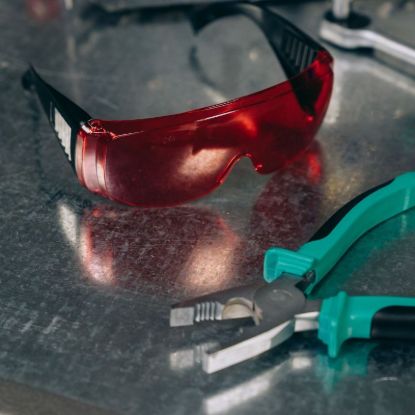
These glasses are the everyday eye protection for workshops, sites and warehouses. A single wraparound polycarbonate lens covers the front and sides of the eyes, so there is no gap at the temples for chips and dust to get in.
At about 25 g they are light enough that people keep them on, which is what matters most with eye protection. The arms are slightly flexible and grip the head without pressing behind the ears.
Choosing a lens
All four versions give the same impact protection; the lens tint decides where they work best. Choose the tint for the light conditions, not for looks, and never wear a dark lens indoors or at night.
None of these lenses is a welding filter. For welding, cutting and brazing you need a shade-rated filter or an auto-darkening helmet.
- Clear: indoor work and general use in any light
- Smoke: outdoor work in bright sun, reduces glare
- Amber: low light, fog and dull days, increases contrast
- Mirror: strong sun and reflected glare from water, glass or snow
Where to use them
Typical uses include drilling, grinding with a guarded tool, cutting, sanding, handling chemicals in small quantities, and general site work where flying particles are a risk. Many sites require glasses for everyone on the shop floor, including visitors.
Glasses protect against flying particles from the front and sides. For liquid splashes, fine dust or molten metal, use sealed goggles or a face shield over the glasses.
Design and construction
The lens is optical class 1, so it does not distort the view and can be worn all day without eye strain. A hard coating on both sides resists scratches, which keeps the lens clear for longer when glasses are put down on benches or carried in pockets.
The frame has no metal parts, which makes the glasses suitable for electrical work and keeps them comfortable in cold weather. The soft nose pad stops the glasses slipping when you sweat.
The lens markings are moulded into the frame and lens, so a supervisor can check at a glance that the right protection is being worn. The impact letter, optical class and the maker's mark are all shown, as EN 166 requires.
Care and replacement
Rinse the lens under running water to remove grit before wiping, then clean with a lens wipe or a soft cloth. Wiping a dry, gritty lens scratches it. Store glasses in a case or pouch, lens up.
Replace glasses when the lens is scratched, pitted or cracked, or after any heavy impact, even if no damage is visible. Scratches scatter light and make people take the glasses off.
Ordering and packs
Glasses are sold singly and in packs of 12 of one lens type. Trade accounts see their tier prices on packs, and the quick order form lets you add clear lenses for the workshop and tinted lenses for outdoor teams in one basket. Many customers keep a box at the stores counter for visitors.
Demo product: invented for the Cartenvo B2B demo store.