Product overview
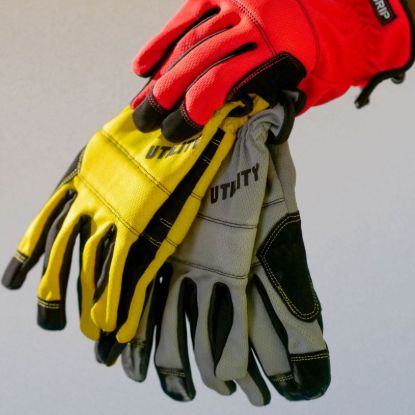
The rigger is the everyday glove of building sites, yards and warehouses. This version has a palm, fingers and knuckle strap of cow-split hide leather, with a breathable cotton drill back that keeps hands cooler than an all-leather glove.
A reinforced palm patch takes the wear where ropes, handles and edges rub most, and the canvas safety cuff slips off quickly if it catches.
Where to use them
Rigger gloves suit rough, dry handling where abrasion and splinters are the main risks. They are not designed for fine work, wet conditions or sharp sheet edges.
They are also a good glove to keep in a van or at a stores counter for visitors and agency staff, because the generous cut fits most hands and the price per pair is low enough to hand them out freely.
- Loading and unloading lorries
- Handling timber, blocks and paving
- Scaffolding and steel stockholding
- Moving drums, pallets and crates
- Landscaping and groundworks
Design and construction
The split hide is chrome tanned, which keeps the leather supple after it has been wet and dried again. Seams are double stitched with strong cotton-polyester thread, and the fingers are shaped so they bend without the leather bunching.
The cuff is rubberised canvas, about 7 cm long, which protects the wrist and makes the gloves easy to pull on and off with dirty hands.
Choosing the right size
Rigger gloves come in size 9 (large) and size 10 (extra large). They are cut generously so they can be worn over a thin liner in cold weather. If your hand measures under 21 cm around the palm, size 9 is usually the better fit.
Leather softens and moulds to the hand over the first few days of wear, so a pair that feels slightly stiff out of the packet will be more comfortable by the end of the week.
Why choose a rigger
Compared with a coated knit glove, a leather rigger lasts much longer on abrasive materials such as blocks, rough-sawn timber and wire rope. Compared with an all-leather glove, the cotton back is lighter and cooler in summer.
The trade-off is dexterity: riggers are not the glove for small fixings or handling paperwork. Many sites issue riggers for loading and carrying, and a thinner coated glove for installation work.
Care, limits and ordering
Brush off dirt after use and let wet gloves dry naturally, away from radiators and heaters, so the leather does not shrink or crack. Replace gloves when the palm wears thin, seams open or the leather becomes hard.
Leather gives good abrasion resistance but limited cut protection. For sheet metal, glass or blades use a cut-resistant glove. Leather is also not waterproof and does not protect against chemicals.
Riggers are sold by the pair and in packs of 12 pairs. Sites that hand them out every week often keep a reorder list or use quick order to top up both sizes at once, and trade accounts see their tier prices on pack quantities.
Demo product: invented for the Cartenvo B2B demo store.