Overview
A nyloc nut is a hexagon nut with a nylon ring set into its top. When the bolt thread reaches the ring it cuts its own thread into the nylon, which presses back on the bolt and creates friction. That friction holds the nut in place even if the joint loses some clamping force, so the nut does not spin off under vibration. It also means the nut holds its position on joints that are deliberately left slightly slack.
These Boltmark nuts are made to property class 8 and match grade 8.8 bolts. They are zinc plated with a clear trivalent passivate for indoor and sheltered use. Because the lock is part of the nut, there is no loose washer to forget or drop into a machine during a repair.
Sold in packs of 100 nuts.
Where to use it
Fit nyloc nuts wherever movement or vibration could loosen a plain nut:
- Pumps, fans, compressors and motor mounts
- Trailers, tow bars and agricultural equipment
- Conveyor frames and machine guards
- Pivot points that must not be fully clamped
- Generator and compressor frames and wheel kits
Design and construction
The steel body is cold forged and tapped with a metric coarse thread. A white polyamide insert is crimped into a collar on top of the nut. The locking effect works without any extra parts, so it saves a lock washer and stays effective at any tightness, including on pivots where the nut is set to a clearance.
Nylon softens at high temperature. The insert is rated to about 120 °C, so do not use these nuts on exhaust parts, engine manifolds or ovens.
Choosing and fitting
Match the thread size to the bolt; all sizes are metric coarse. Use a bolt long enough for at least two full threads to pass through the nylon ring, otherwise the lock does not engage properly.
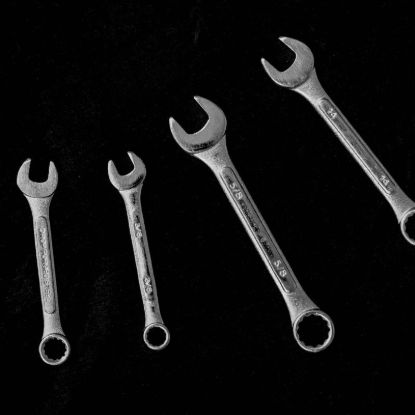
Start the nut by hand, then use a spanner or socket once the bolt reaches the insert. The nut will feel stiff from that point; this is the locking torque, not a cross thread. Tighten to the torque the bolt grade calls for. A power tool is fine for running on, but finish with a torque wrench on critical joints.
Reuse and care
The nylon loses some grip each time the nut is removed. On safety-related joints, such as wheels, brakes or lifting gear, always fit a new nut. On general equipment a nut can be reused a few times as long as it still needs a spanner to turn once on the thread.
Store nuts out of direct sunlight; long UV exposure makes nylon brittle.
Packaging and ordering
Supplied in labelled packs of 100 with a barcode for quick booking in. Many workshops keep a stock of each size next to the plain nuts so fitters always replace a nyloc with a nyloc. Trade buyers can combine sizes in one quick order, and tier prices apply in the basket when you are signed in.
Demo product: invented for the Cartenvo B2B demo store.