Overview
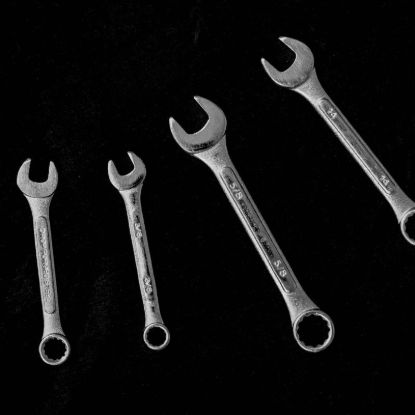
The Torqline combination spanner has an open jaw at one end and a 12-point ring at the other, both 19 mm. Use the ring to break a fastener loose or to apply final torque, and the open end to spin it quickly where the ring cannot reach.
It is drop-forged from chrome vanadium steel, hardened and tempered, then finished in satin chrome that resists rust and wipes clean.
Where to use it
It is the standard spanner for maintenance teams, fitters, electricians and installers.
- Metric hex bolts and nuts on frames and brackets
- Machine guards, motor mounts and pump bases
- Cable glands and conduit fittings
- Racking, shelving and strut channel
- Generator and compressor servicing
Design and construction
The ring end uses a flank drive profile. It loads the flats of the hex instead of the corners, which reduces slipping on worn or painted fasteners. The ring is offset by 15° to clear the hand from the work surface.
The open jaw is angled at 15° to the handle, so flipping the spanner gives a new working position in tight spaces. Dimensions and strength follow DIN 3113 and ISO 7738. The size is stamped on both sides of the handle.
Choosing the size
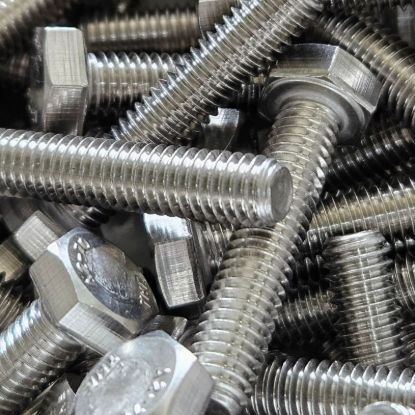
Choose by the size across the flats of the hex, not the thread. For ISO 4017 hex bolts the usual pairs are: M5 uses 8 mm, M6 uses 10 mm, M8 uses 13 mm, M10 uses 17 mm and M12 uses 19 mm.
Many fitters carry 10, 13, 17 and 19 mm as their core sizes. Each size is sold separately, so you can replace a lost spanner without buying a whole set.
Spanner or socket
A combination spanner is quick and reaches where a ratchet will not fit, but it gives less control over torque. For final tightening of structural bolts, flanges and wheel nuts, use a torque wrench with a socket set to the value in the drawing or manual.
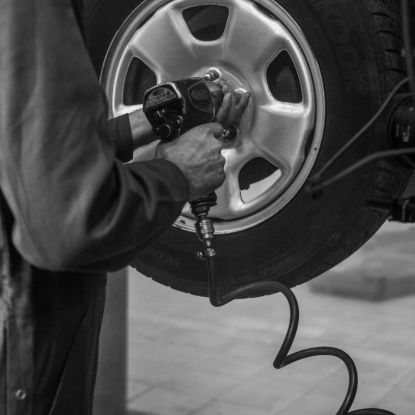
For repetitive work on long threaded rods or many fasteners, an air or cordless impact wrench saves time. Use the spanner to hold the nut on the other side, or to finish and check by hand.
On nyloc nuts, expect resistance all the way down; that is the locking insert doing its job, not a cross-thread. On zinc-plated or stainless fasteners that have been outdoors, a little penetrating oil before turning makes the job easier and protects the threads from galling. The 19 mm spanner is also handy for holding a bolt head while a nut is tightened with a socket.
Safe use and care
Pull rather than push, so your knuckles stay clear if the fastener breaks loose. Never extend the handle with a tube or strike it with a hammer, as that overloads the jaw. Use a torque wrench when a specified torque is required.
Wipe off oil and grit after use and store the spanner dry. Replace it if the jaw has spread or the ring is cracked.
Demo product: invented for the Cartenvo B2B demo store.