Overview
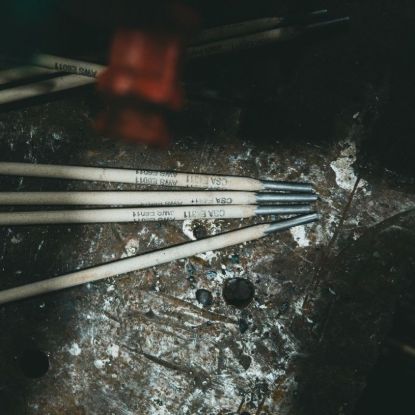
Filler rod quality shows in the weld. Rods that are bent, dirty or oxidised cause porosity, inclusions and an uneven bead, however good the welder. These Spatterline rods are drawn to a tight diameter tolerance, cut straight to 1 m and packed in a sealed tube with a screw cap, so they stay clean on the bench.
Each rod end is stamped with its grade, which avoids mix-ups between steel and stainless rods on a busy bench.
The rods suit fabrication shops, pipework and maintenance teams, and anyone welding food, dairy and process equipment where clean, sound welds are part of the specification. The 5 kg tube is a practical size for a workshop: enough for steady use without rods sitting open for months.
Key features
- 1 m rods, 5 kg tube
- Batch certificate on request
Choosing the grade
Match the filler to the parent metal. Using the wrong grade can leave a weld that looks fine but cracks or corrodes in service.
- ER70S-6 steel: mild and carbon steels, including slightly rusty or mill-scaled material
- ER70S-6 has extra manganese and silicon to clean the weld pool
- ER316L stainless: 316 and 316L, and 304 where better corrosion resistance is wanted
- ER316L: low carbon content reduces the risk of corrosion along the weld
- Steel rods are copper coated; stainless rods are bright drawn
Choosing the diameter
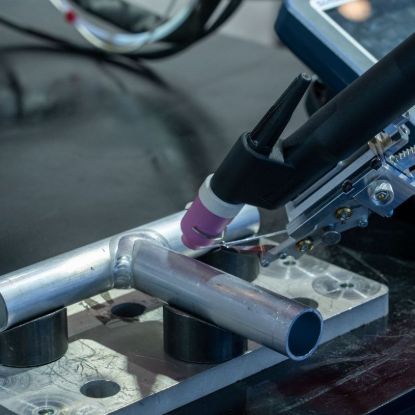
A good rule is to use a rod about the same diameter as the tungsten and no thicker than the material. Use 1.6 mm rod for sheet up to about 2 mm and for root runs on thin pipe. Use 2.4 mm for general fabrication from 2 to 6 mm, which is the most popular size. Use 3.2 mm for thicker plate, fillet welds and fill passes where you need to add metal quickly.
The recommended current range for each diameter is listed in the specifications. Stainless needs slightly less current than steel of the same thickness, because it conducts heat away more slowly.
Use and storage
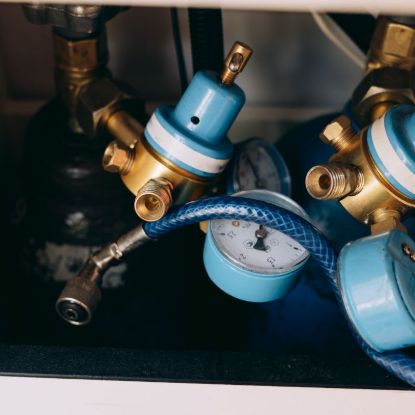
Weld with pure argon shielding gas. Wipe each rod with a clean cloth and acetone before use if it has been handled with oily gloves. Keep the hot end of the rod inside the gas shield while you weld, so it does not oxidise between dips. Snip off any discoloured end before the next weld.
Store the tube closed, horizontal and in a dry place. Opened tubes should be capped after each use. Copper-coated steel rods left out in a damp workshop will rust and should not be used for critical welds.
Traceability and ordering
Each tube carries a batch number, and a type 3.1 inspection certificate to EN 10204 is available on request for work that needs traceable materials, such as pressure equipment and food processing plant. Rods are classified to AWS A5.18 (steel) and AWS A5.9 (stainless).
Tubes are sold individually. Trade customers can order several grades and sizes on one quick order, buy on account and save the list for repeat orders.
Demo product: invented for the Cartenvo B2B demo store.