Overview
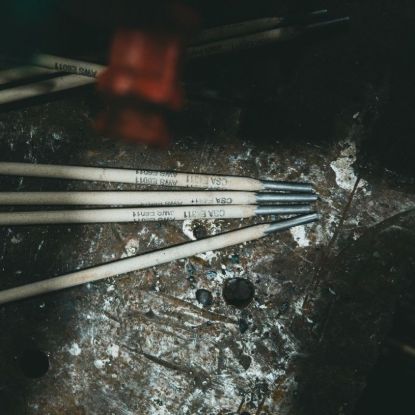
E6013 is the most widely used stick electrode for mild steel, and for good reason. The rutile flux coating gives a soft, stable arc that is easy to strike and restrike, a smooth bead with fine ripples, and slag that often lifts off by itself. It is forgiving of small changes in arc length and works well on low open-circuit voltages, so it suits small inverters and transformer welders alike.
These Spatterline electrodes are vacuum-packed, so they arrive dry and ready to use without baking.
Key features
- All-position welding
- AC or DC
- Vacuum-packed 5 kg box
Where to use them
Use E6013 on general mild steel where appearance and ease of use matter more than the highest toughness.
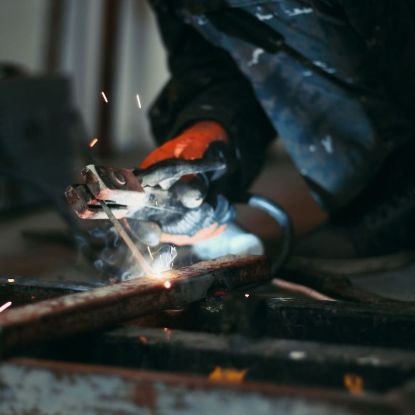
- Gates, railings, frames and brackets
- Agricultural and plant repairs
- Sheet from about 2 mm and light structural sections
- Tack welding and fit-up before other processes
- Training and occasional welding, as they are easy to learn with
Choosing the diameter
Choose the diameter by material thickness and by what your welder can supply. The 2.5 mm rod suits material from about 2 to 5 mm and runs on welders from 100 A. The 3.2 mm rod is the general workshop size for 4 to 10 mm material and needs about 140 A. The 4.0 mm rod deposits metal faster on thick plate and fillet welds, and needs a welder of 180 A or more.
The current range for each size is given in the specifications. Start in the middle of the range and adjust to suit the joint and position.
When to choose another rod
E6013 is not the right rod for every job. For structural steel that must meet a specification, high-strength steels, thick sections or parts under impact loads, use a low-hydrogen basic electrode such as E7018. For cast iron and stainless steel, use a rod made for those metals.
Rutile rods are also less suited to very dirty or heavily rusted steel, where a more fluid, deeper-penetrating rod copes better. Grinding the joint back to bright metal makes any electrode easier to use and gives a sounder weld.
Storage and handling
Keep unopened packs in a dry store. Once a pack is opened, keep the electrodes in a closed container or rod oven, away from damp and condensation. Rutile rods tolerate some moisture better than low-hydrogen rods, but damp rods spatter, stick and leave porosity. If rods have picked up moisture, dry them at 70 to 100 °C for one hour. Discard any rods with cracked or flaking coating.
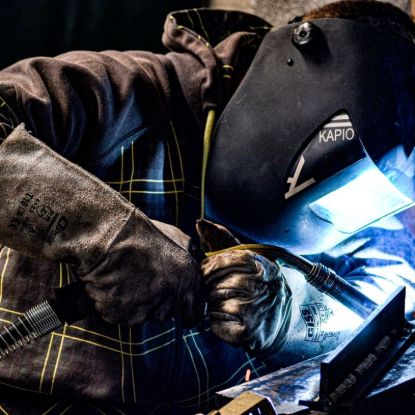
Chip the slag off each run before the next, and wear eye protection when chipping.
Compliance and ordering
The electrodes are classified to AWS A5.1 E6013 and ISO 2560-A, and are CE and UKCA marked to EN 13479. Each 5 kg box is sold separately, and trade customers can order several sizes on one quick order and buy on account.
Demo product: invented for the Cartenvo B2B demo store.