Overview
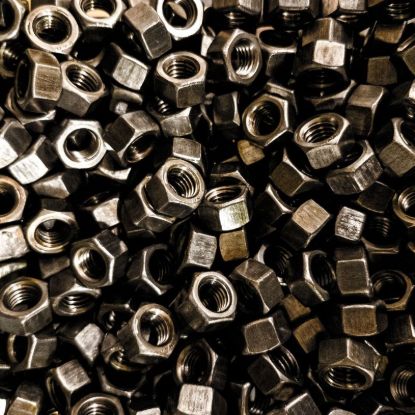
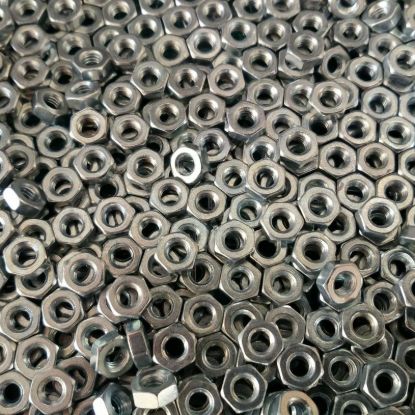
The full hex nut is the standard partner for metric bolts, setscrews and threaded rod. These nuts are made to property class 8, so they can carry the full proof load of a grade 8.8 bolt of the same size without the threads stripping. A bright zinc plate with a clear trivalent passivate keeps them clean and protects against light corrosion indoors.
Every nut in the range is gauged for thread fit before packing, so it runs on smoothly by hand for the first few turns. That saves time on the job and makes it obvious when a bolt thread is damaged rather than the nut.
Sold in packs of 100 nuts.
Where to use it
Use these nuts wherever a standard hexagon nut is called for and the joint is indoors or under cover:
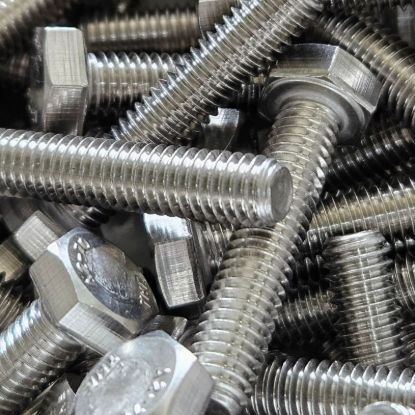
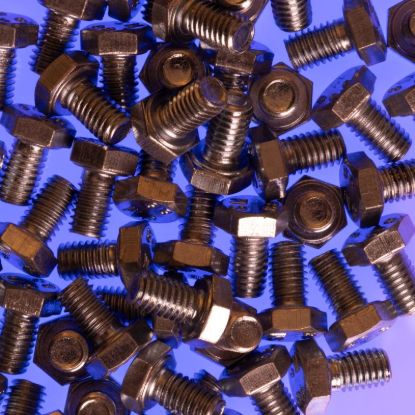
- With grade 8.8 hex bolts and setscrews
- On threaded rod for pipe and cable tray hangers
- Machine frames, guards, brackets and fixtures
- Racking, shelving and workbench assembly
- As a lock nut, tightened against a second nut
Design and construction
The nut is cold forged and tapped with a 6H metric coarse thread. Both faces are chamfered, so the nut can be started from either side. The height is close to the thread diameter, which gives enough engaged thread for the nut to match the strength of a grade 8.8 bolt.
The zinc coating is thin enough not to bind on a plated bolt but still gives a uniform bright finish that is easy to spot in a parts bin.
Choosing the right nut
Match the thread size to the bolt: an M10 bolt needs an M10 nut. Our nuts all use the metric coarse pitch, which is the default for bolts, setscrews and studding sold in the UK. Fine-pitch threads, imperial sizes and stainless bolts need different nuts.
For joints that vibrate, such as machinery or vehicle parts, a nyloc nut or a spring washer helps stop the nut working loose. For outdoor work use stainless nuts with stainless bolts.
Fitting and care
Fit a flat washer under the nut on soft or painted surfaces. Tighten to the torque the bolt grade calls for; the nut is designed to take it. At least one full thread of the bolt should project beyond the nut once it is tight.
If a nut must be removed often, for example on a jig or an access panel, a light smear of oil on the thread makes it easier and protects the zinc. Discard nuts with damaged threads or rounded flats rather than forcing them back on.
Keep stock dry and in sealed bags to stop the zinc from dulling over time. Bagged nuts kept in a heated store will look and run the same years later.
Packaging and ordering
Nuts are sold in labelled packs of 100, each with a scannable barcode for stores and van stock. Add matching washers and bolts in the same order with quick order; trade prices for larger quantities show in the basket once you sign in.
Demo product: invented for the Cartenvo B2B demo store.