Overview
This is a general-purpose round flexible cord with three cores: brown for line, blue for neutral and green and yellow for earth. It is the 3183Y type made to BS EN 50525-2-11, with fine class 5 copper strands that stay supple when the cable is coiled, moved and plugged in day after day.
The white PVC sheath is smooth and easy to wipe clean, and it strips neatly with a standard cable stripper. The cores are colour-coded to the harmonised scheme, so connections are quick to make and easy to check.
Applications
Use it wherever a flexible connection is needed between a fixed outlet and a piece of equipment indoors.
- Replacing worn leads on kettles, heaters and office equipment
- Making up extension leads with rewireable plugs and sockets
- Pendant lighting drops and luminaire connections
- Workshop machines that are moved occasionally
- Display and shop-fitting installations
Construction
Each conductor is made from many fine copper strands, which is what lets the cable flex thousands of times without the copper work-hardening and breaking. The cores are insulated in PVC, laid up together with fillers so the cable stays round, and covered with a PVC sheath that grips well in a cord clamp.
A round profile matters: plugs, connectors and appliance glands are designed to seal and grip on a round cable, so the cord stays secure and the outer sheath always reaches inside the fitting.
Choosing the right size
Pick the conductor size from the load. As a guide, 0.75 mm² carries up to 6 A and suits lamps and small appliances; 1.0 mm² carries up to 10 A; 1.5 mm² carries up to 16 A and is the usual choice for 13 A extension leads and heaters. Longer leads need a larger size to keep the voltage drop down, and a coiled lead must be fully unwound before full load is drawn.
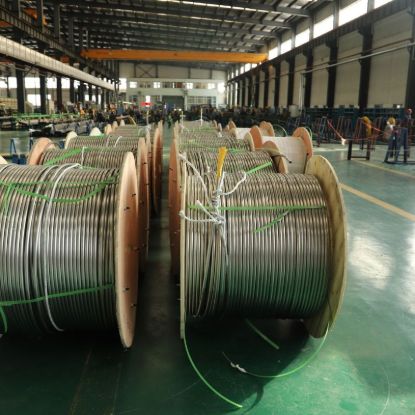
The 25 m coil suits replacement work. The 50 m and 100 m drums suit workshops, facilities teams and anyone making up leads in quantity. Trade customers see their tier prices on every length.
Installation, use and care
Fit the cable with a cord grip at both ends so the conductors never carry the pull. Strip only as much insulation as the terminal needs, twist the strands together and use bootlace ferrules where the terminal suits them.
Inspect leads regularly as part of your portable appliance checks. Replace any cable with cuts, crushing or scorch marks rather than taping it.
- Keep away from hot surfaces and sharp edges
- Do not run under carpets or through doorways where it can be crushed
- For outdoor or oily environments choose a rubber or arctic-grade flex
Compliance and ordering
The cable is made to BS EN 50525-2-11 and is CE and UKCA marked. It is a flexible cord for connecting equipment and is not intended as a substitute for fixed wiring cable. Each coil and drum carries a batch label and a barcode, and lengths can be reordered in a few clicks from your order history or a saved list.
Demo product: invented for the Cartenvo B2B demo store.